Critical Warning Signs Your Car Needs Immediate Help
Critical Warning Signs Your Car Needs Immediate Help
Your car communicates constantly through sounds, smells, vibrations, and visual cues. The key is learning to recognize when these warning signals indicate a minor issue versus a potential disaster. According to AAA's 2026 Vehicle Reliability Study, drivers who respond promptly to early warning signs spend 67% less on repairs than those who ignore them.
Dashboard Warning Lights You Can't Ignore
Modern vehicles feature sophisticated monitoring systems that track dozens of components. When something goes wrong, your dashboard becomes command central for emergency communications.
Engine Warning Light
The check engine light represents the most common dashboard warning, appearing in roughly 15% of all vehicles on the road today. This amber indicator can signal anything from a loose gas cap to serious engine damage. While it doesn't always mean immediate danger, you shouldn't drive more than a few days without diagnosis.
A flashing check engine light, however, demands immediate attention. This indicates misfiring that can destroy your catalytic converter within minutes, potentially costing $2,000 or more in repairs.
Oil Pressure Warning
The oil pressure light represents one of the most serious warnings your car can give. When this red light illuminates, you have perhaps 30 seconds before catastrophic engine damage occurs. Pull over immediately and shut off the engine.
Without adequate oil pressure, metal components grind against each other at thousands of RPMs, generating extreme heat and friction. This scenario often results in complete engine replacement, with costs ranging from $4,000 to $8,000 depending on your vehicle.
Temperature Warning
Overheating destroys engines faster than almost any other mechanical failure. When your temperature gauge enters the red zone or the coolant warning light activates, stop driving immediately.
Continuing to drive an overheating engine can warp cylinder heads, crack engine blocks, or blow head gaskets. These repairs often exceed the vehicle's value, particularly in older cars. Understanding your car's dashboard warning lights provides detailed information about interpreting these critical signals.
Suspicious Sounds That Demand Action
Grinding or Squealing Brakes
Brake sounds fall into distinct categories, each indicating different levels of urgency. High-pitched squealing typically means your brake pads have reached their wear indicators - small metal tabs designed to create noise when replacement becomes necessary.
Grinding sounds, however, indicate metal-on-metal contact. Your brake pads have worn completely through, and the backing plates are now scoring your rotors. This situation compromises your stopping ability and requires immediate attention.
The National Highway Traffic Safety Administration reports that brake-related issues contribute to approximately 22% of vehicle accidents. Don't gamble with your safety when you hear grinding brakes.
Knocking or Pinging Engine Sounds
Engine knock occurs when fuel ignites prematurely in the combustion chamber, creating a distinctive metallic rattling sound. This condition can destroy pistons, connecting rods, and other internal components within a relatively short time.
Modern engines include knock sensors that should prevent this problem, but sensor failures do occur. If you hear persistent knocking, especially under acceleration, seek professional diagnosis immediately.
Unusual Exhaust Noise
Sudden changes in exhaust sound often indicate problems with the exhaust system, which affects more than just noise levels. A damaged exhaust system can allow carbon monoxide to enter your vehicle's cabin, creating a potentially lethal situation.
Loud rumbling sounds might seem minor, but they can indicate problems with oxygen sensors, catalytic converters, or other emissions components that affect engine performance and fuel economy.
Visual and Physical Warning Signs
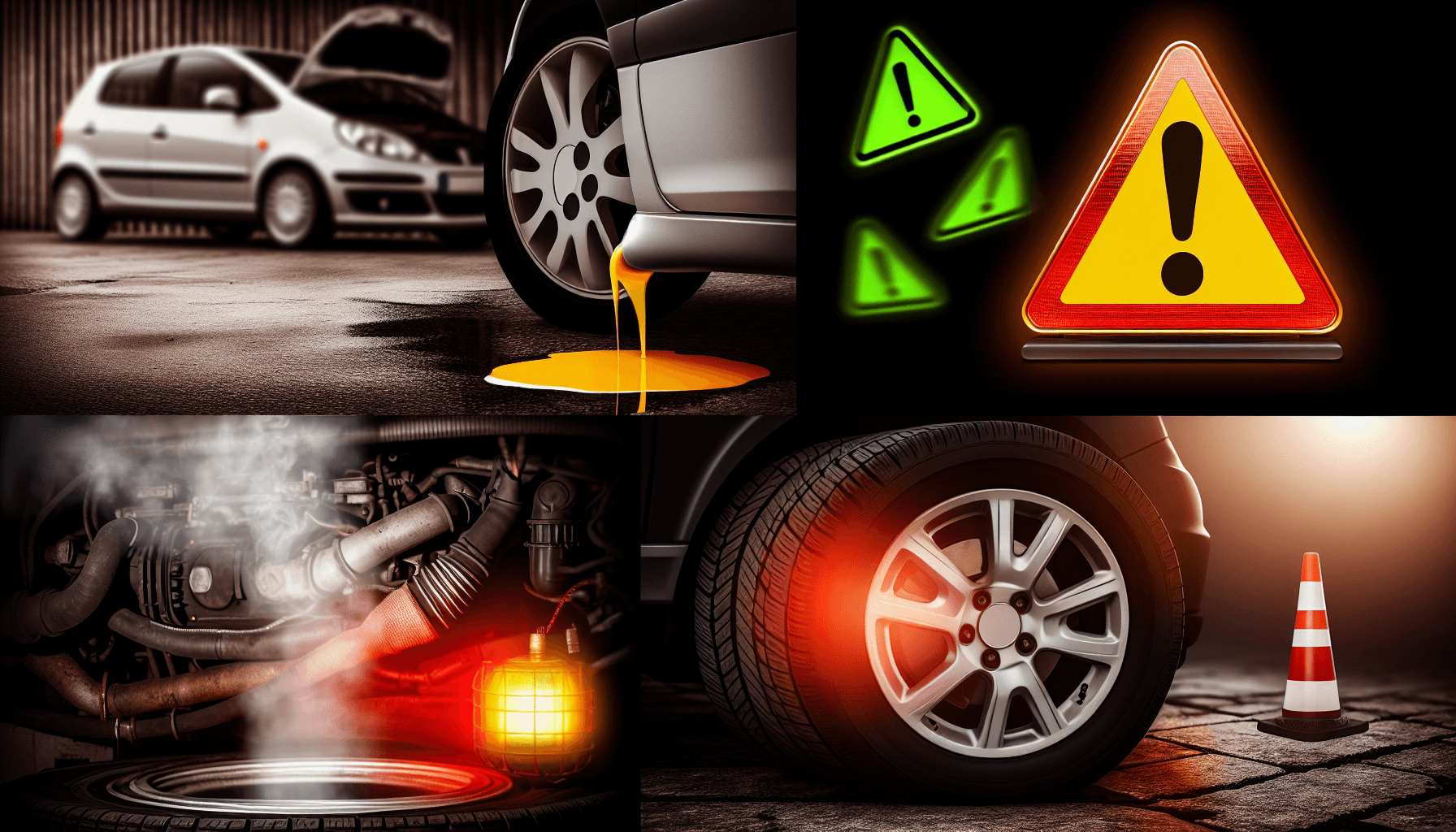
Fluid Leaks Under Your Vehicle
Different colored fluids indicate specific problems:
- Dark brown or black: Engine oil leaks can lead to catastrophic engine damage if oil levels drop too low
- Red or pink: Transmission fluid leaks affect shifting and can destroy your transmission
- Green, orange, or yellow: Coolant leaks can cause overheating and engine damage
- Clear or light brown: Brake fluid leaks compromise your stopping ability
Smoke From the Engine Bay
Any smoke from under the hood requires immediate investigation. White smoke might indicate coolant leaks onto hot engine components, while blue smoke could signal oil burning on exhaust manifolds. Black smoke often indicates serious fuel system problems.
Never continue driving when you see smoke. Pull over safely, turn off the engine, and exit the vehicle until you can determine the source.
Unusual Vibrations
Vibrations through the steering wheel, brake pedal, or entire vehicle can indicate various problems. Steering wheel vibration during braking often means warped brake rotors, while vibration during acceleration might indicate worn CV joints or engine mounts.
Severe vibrations can affect your ability to control the vehicle safely, particularly at highway speeds.
When Warning Signs Become Expensive Problems
Ignoring warning signs transforms minor repairs into major expenses. A $200 brake pad replacement becomes a $800 rotor and caliper job when ignored. A $150 coolant leak repair becomes a $3,000 engine replacement when overheating occurs.
The automotive repair industry reports that preventive maintenance costs roughly 25% of reactive repairs. This mathematics makes paying attention to warning signs a smart financial decision.
Regular maintenance practices help prevent many emergency situations, but unexpected failures still occur. Many drivers find that comprehensive warranty coverage provides peace of mind when major component failures happen despite proper maintenance.
Quality warranty plans may cover engine repairs, transmission work, and other expensive systems when mechanical breakdowns occur. However, coverage typically excludes damage from neglect or failure to address known problems promptly.
Disclaimer: The coverage mentioned is general information. Your specific warranty terms may vary.
Creating Your Emergency Response Plan
Develop a systematic approach to handling automotive emergencies:
- Know your vehicle's warning systems - Read your owner's manual to understand what each light and sound means
- Keep emergency supplies - Basic tools, flashlight, emergency triangles, and jumper cables
- Identify trusted repair facilities - Research shops before you need them
- Understand your coverage - Know what your insurance and warranty plans include
Taking Action When Warning Signs Appear
Your response to warning signs determines whether you face a minor inconvenience or major financial impact. Critical warnings like oil pressure, temperature, or brake problems require immediate action. Less urgent signs like check engine lights allow time for proper diagnosis, but shouldn't be ignored indefinitely.
Modern vehicles provide sophisticated warning systems designed to protect your investment and safety. Learning to interpret and respond to these signals appropriately can save thousands in repair costs while keeping you safe on the road. When in doubt, seek professional diagnosis rather than hoping the problem resolves itself.